 ManifestMe
Daily rituals
A 20-minute weekly reset routine with room for real life
A new week can arrive with old notes, unfinished errands, and more ideas than your calendar can hold. You do not need to turn your day off into a preparation marathon. This short reset gives you a place to look at what is coming, choose what deserves attention, and make one useful preparation before you move on.

Give the reset a small, clear job
For this guide, a weekly reset routine means a brief check-in with the week ahead. Its job is to produce a usable note: what is already scheduled, one thing you want to make room for, and one preparation you can finish now. A spotless home and a complete life plan are outside its scope.
Set aside about twenty minutes if that feels practical. The timing below is a suggested limit, not a measured promise about how long every task will take. Use paper, a notes app, and whichever calendar already holds your commitments. You do not need a new planner.
If you like the phrase Sunday reset, use it as a reminder rather than a rule. A Wednesday afternoon or the end of your last shift may suit your week better. Choose a point when you can see the next several days clearly enough to make a few decisions.
Minutes 0–5: look at the week you actually have
Begin your weekly planning with existing commitments. Check appointments, work shifts, deadlines, travel time, and anything you have already promised someone. Look for a crowded day or a detail that needs confirmation. Record the specific question instead of guessing the answer.
For example, an appointment at 4 p.m. may also require finding an address and arranging transportation. Put those preparations where you will see them before the appointment. If your week includes caregiving or changing shifts, leave uncertain periods visibly open instead of treating them as available time.
Then look at last week's unfinished list. Choose deliberately whether each relevant item belongs this week, needs a later review, or can be removed. You do not have to transfer every old idea onto a fresh page. If an item keeps moving forward, ask whether the next step is unclear or whether you still want to do it.
Minutes 5–10: choose one intention and one visible action
Ask what quality you want to bring to the week you just reviewed. A busy calendar might call for patience. A week with a difficult conversation might call for honesty. Keep the intention close to a situation you can recognize, rather than choosing a word because it sounds impressive.
Translate that quality into one action. “I want to be more present” might become “During dinner on Tuesday, I will put my phone away for the conversation.” “I want room for creativity” might become “On my next free afternoon, I will spend ten minutes sketching before opening social media.” These are optional examples, not standards for a good week.
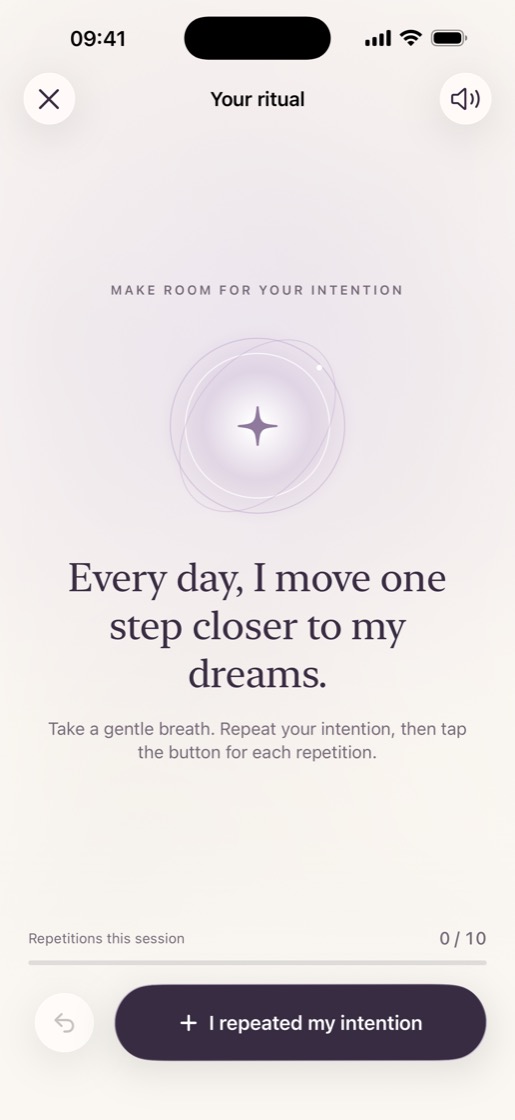
Our guide to turning an intention into a small daily action offers more ways to narrow a broad wish. You can keep the sentence with your personal intentions in ManifestMe and revisit it at a relevant moment. Leave detailed appointments in your usual calendar so you have one place to check them.
Minutes 10–15: prepare one thing that removes a specific obstacle
Choose a preparation connected to something you actually plan to do. Put a library book by your bag, locate the document you need for an appointment, or clear enough desk space to open your notebook. Finish one bounded task rather than beginning a larger project you cannot complete in this time.
A useful question is: What would I otherwise have to hunt for, decide, or set up at an inconvenient moment? Answer with an object or a small action. “Find the file for Thursday's meeting” is easier to act on than “Get organized.” If finding it takes longer than expected, record where you looked and schedule the remaining search.
Preparation can also mean confirming a detail with someone, but only send a message if you are ready to make that request. An unanswered question remains an open question; writing it down does not make the arrangement confirmed.
Minutes 15–20: leave room and write a stopping point
Look back at the note and remove anything that depends on having more time than you can reasonably expect. Choose one optional activity you would enjoy if space opens up. Keep it separate from commitments so a changed plan does not make the whole page look unfinished.
Try this compact note as an example: Already scheduled: a Tuesday appointment and a Thursday deadline. Personal intention: give conversations my full attention. Preparation: put the appointment address in my calendar. Optional: take my sketchbook to the park. The details are fictional; the structure is yours to adapt.
Finish by naming the next time you will consult the note, such as before starting work on Monday. Then stop the reset. If another task comes to mind, capture it in your usual list. You can close a planning session while ordinary life is still untidy.
Use the three-minute version when the week is crowded
When twenty minutes is too much, answer only three questions: What is the next fixed commitment? What needs to be ready for it? What is one intention I want to remember? Write one line for each. Skip the broader review and return to it when you have room.
If you prefer to connect the weekly note to an existing morning practice, our five-minute morning intention routine can help you choose a single sentence to revisit. You do not need to repeat the full weekly reset every morning.
A missed week does not need a double-length replacement. Begin with the next few days. If the same step repeatedly feels unnecessary, remove it. If one missing detail keeps causing trouble, add a prompt for that detail. Let the routine respond to your actual week.
Check the usefulness of the note, not your performance
The next time you reset, ask whether your note was easy to find and whether it held the information you needed. Did you write an intention that was too broad to use? Did the preparation match a real obstacle? Make one adjustment instead of grading the entire week.
You may also want to notice something worth keeping: an unhurried conversation, an activity you made time for, or help you received. These gratitude journal prompts for ordinary days offer a separate space for that reflection if you want one. It does not have to become another mandatory reset step.
The finished result can be a small, imperfect note. It should tell you where to look next and what you chose to make room for. The rest of the week is allowed to unfold.
Keep your intention close.
Explore personal affirmations, daily rituals, and vision boards in ManifestMe.
Explore the app ↗